
Over the past decade, 3D‑printed construction has focused on solving “can we build it?” The next goal is to guarantee construction quality. Limited by single‑nozzle hardware, conventional 3D‑printed concrete features satisfactory compressive strength yet poor tensile behaviour and high thermal conductivity. Multi‑material hybrid printing aims to break these performance constraints.
Performance Limits of Single‑Nozzle Systems
Tested thermal transmittance (U‑value) of printed concrete walls ranges 1.87‑3.04 W/(m²·K), exceeding the engineering threshold below 1.5 W/(m²·K). Pure mortar walls cannot meet insulation requirements and demand extra post‑applied insulation layers. Mechanically, concrete cracks and fails abruptly once damage initiates. Manual rebar insertion interrupts continuous printing, creating major on‑site constraints. Insulation, embedded piping, levelling and waterproofing are currently completed as separate post‑printing procedures. Multi‑material printing intends to integrate these functions into one printing sequence.
Core Research Directions for Multi‑Material Printing
Multi‑material printing deposits multiple dissimilar materials along one motion path, supporting layered alternation, gradient transition and local material embedding. Three major research branches are underway.多材料打印可在同一条运动路径上沉积多种不同材料,支持层间交替、梯度过渡以及局部材料嵌入。目前正开展三大研究方向。
First is concrete crack‑resistance improvement. Princeton University’s Reza Moini team drew bio‑inspiration from deep‑sea glass sponges, developing Architectured Cementitious Composite (ACC) by inserting thin polyurethane soft interlayers within mortar. Small‑scale specimen tests show fracture toughness rises up to 82 times versus printed mortar and 187 times versus cast mortar; ductility increases 22.6‑fold without compromising flexural strength. Soft interlayers deflect cracks and consume fracture energy. However, all data come from lab specimens; full‑scale real‑environment validation is still required.
Second is synchronous reinforcement printing. A joint research group from Hong Kong Polytechnic University and Technische Universität Dresden adopted a three‑channel nozzle to extrude mortar while laying carbon‑fibre textile mesh, using SHCC as binder. The 5 mm dense‑mesh specimen boosted flexural strength by 305.6 % and ultimate deflection greatly. Their earlier dual‑nozzle solution applied SHCC for inter‑layer bonding, lifting interfacial bond strength by 80 % and cutting interfacial porosity by 35 %. Results confirm inter‑layer interfaces are the critical weak point of 3D‑printed concrete, which multi‑material technology can optimise.
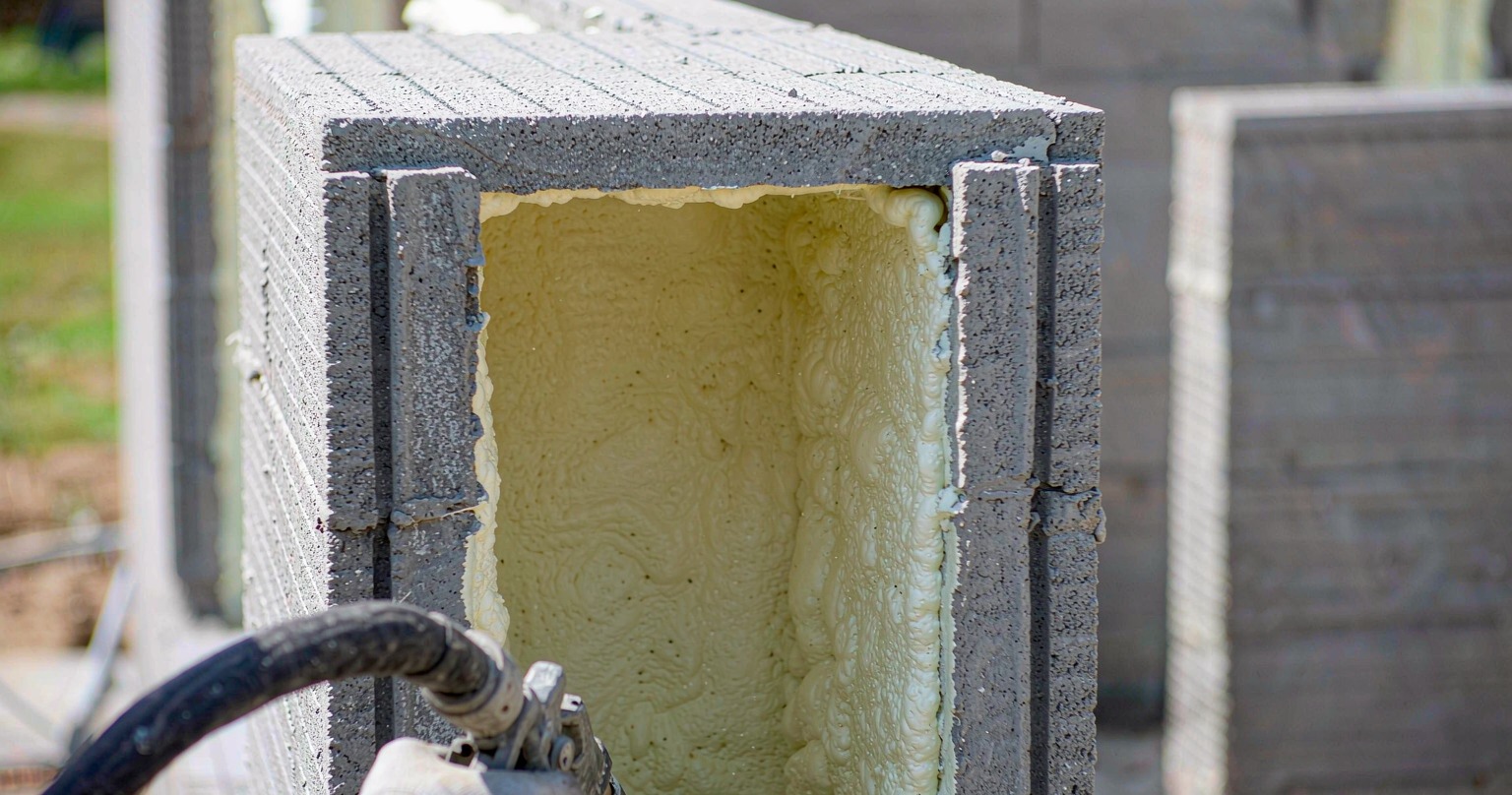
Third covers integrated functional‑layer printing, where thermal insulation is the most mature field. ICON’s wall system fills wall cavities with polyurethane foam, reaching U‑value of 0.32 W/(m²·K). France’s Yhnova residential project adopted a foam‑concrete‑foam sandwich structure. Its walls achieve high thermal resistance, cutting primary‑energy consumption 30‑40 % below local code limits. Ongoing laboratory trials explore gradient‑performance members, vertical green printed walls and phase‑change‑material‑modified mortar.
Besides material‑oriented studies, design‑driven exploration also advances. Tongji University and RMIT University developed FloatArch, a 4‑metre‑span printed concrete prototype bridge. Via multi‑material BESO form‑finding, printed components bear compression while steel cables undertake tension. Dry assembly enables disassembly and re‑use. This proves multi‑material printing is both equipment‑related and a computational design problem.
Practical Barriers
Multiple bottlenecks hinder large‑scale deployment. First, mismatched process windows: mortar, foam and polyurethane require distinct setting and curing timelines, making temporal scheduling a core technical challenge. Second, interface risks: mismatched thermal expansion and poor chemical compatibility produce weak bonding planes. Material durability is concerning; for example, polyurethane foam degrades after repeated freeze‑thaw cycles, separating short‑term printed performance from long‑term service reliability. Third, equipment difficulties: nozzle calibration, anti‑contamination, feeding‑pressure matching and path‑planning synchronisation still need iterative engineering polishing. Most reported mechanical gains remain confined to lab‑scale specimens. Fourth, regulatory gaps: existing standards are tailored for single‑material concrete. No consensus covers testing protocols, durability evaluation and design‑value calculation for multi‑material members. Improved fracture toughness cannot be directly converted into higher design bearing capacity; ductility and interfacial performance matter more for building codes. Finally, cost pressure: extra feeding systems and specialised training raise construction costs. Economic benefits mainly appear for special scenarios such as complex prefabricated components. No universal cost‑effective solution exists.
Implementation Outlook
Multi‑material hybrid printing is unlikely to deliver fully multi‑material printed buildings in the near term. It will first gain ground in factory‑fabricated components: pre‑made insulated wall panels, functional slabs and municipal bridge elements. Factory conditions facilitate process control and independent component certification, avoiding delays from whole‑building regulatory revision.
Three observable inflection‑point signals are worth tracking: feasible retrofitting of existing printing hardware, emergence of structurally‑qualified multi‑material components, and inclusion of interfacial‑performance assessment within formal standards.
Single‑material 3D‑printing has realised geometric freedom, yet performance targets including toughness, insulation, durability and certification remain hard to achieve. The core merit of multi‑material printing lies not in complex shapes, but in merging separate traditional construction workflows into one continuous additive‑manufacturing process. This is its major value as well as its toughest short‑term challenge.