
fter earthquakes, floods and typhoons, the top priority for displaced populations is fast shelter. Traditional permanent housing takes months or even years to complete, leaving disaster‑affected families stranded in temporary camps and exposed to health and social risks. 3D‑printed construction (architectural additive manufacturing) addresses three core reconstruction pain points: speed, cost and modularity.
The Dilemma of Conventional Reconstruction
Traditional rebuilding suffers overlapping constraints. Post‑disaster sites face damaged infrastructure, material shortages and a lack of skilled labour. On‑site material waste reaches 20‑30 %, and surging demand inflates prices. Worse, rebuilding with old methods often recreates the same vulnerabilities, leaving communities exposed to repeated disaster damage.
Speed: Cutting Wall Construction from Months to Hours
3D printing drastically shortens structural work. Projects in Mexico completed 46 m² residential walls in roughly 24 hours with only 2‑3 on‑site operators. Japanese spherical emergency housing finishes printed structures in about 23 hours while meeting local seismic standards.
Note: The 24‑hour figure refers only to wall printing. Doors, roofing and interior work still require additional days or weeks. Even so, overall delivery shrinks from months to around two‑to‑three weeks. Since houses are physical outputs of digital designs, validated blueprints can be replicated endlessly without re‑organising construction crews.
Cost: Stretching Relief Budgets Further
- Material savings: Digital precision minimises waste. Formwork and mould costs are eliminated; complex shapes incur no premium.
- Local‑source advantage: Printing mortar can use up to 75 % local sand and aggregate. Only small volumes of special admixtures need long‑distance transport. Printing equipment fits in standard shipping containers for rapid deployment.
- Reduced labour: Automation offsets the shortage of skilled site workers.
In Mexico’s Nacajuca project, 3D‑printed homes cost around 30 % less than local conventional equivalents. Larger‑scale builds and greater use of local materials drive costs even lower.
| Comparison | Conventional Construction | 3D‑Printed Construction |
| Wall construction | Weeks‑months | Hours‑days |
| On‑site labour | Dozens‑hundreds | 2‑3 operators |
| Material waste | 20‑30 % | Very low |
| Replication | Re‑plan for each unit | Re‑use digital blueprint |
| Disaster reinforcement | Depends on workmanship | Targeted structural strengthening |
Modularity: Building Scalable Disaster‑Resilient Communities
Modularity offers system‑level benefits beyond individual houses:
- Reusable digital templates: Adjust dimensions, layouts and climate parameters digitally to generate homes, clinics or schools.
- Scalable assembly: Modules combine like building blocks. Larger deployments improve cost efficiency: quadrupling resident capacity increased print time by only 3.5‑fold in one case.
- Flexible production: Choose on‑site printing where conditions allow, or factory‑pre‑produced modules for difficult locations.
- Built‑in resilience: Print rounded corners and reinforced high‑stress zones to match local seismic, flood and wind requirements.
Resilience: Build Back Stronger
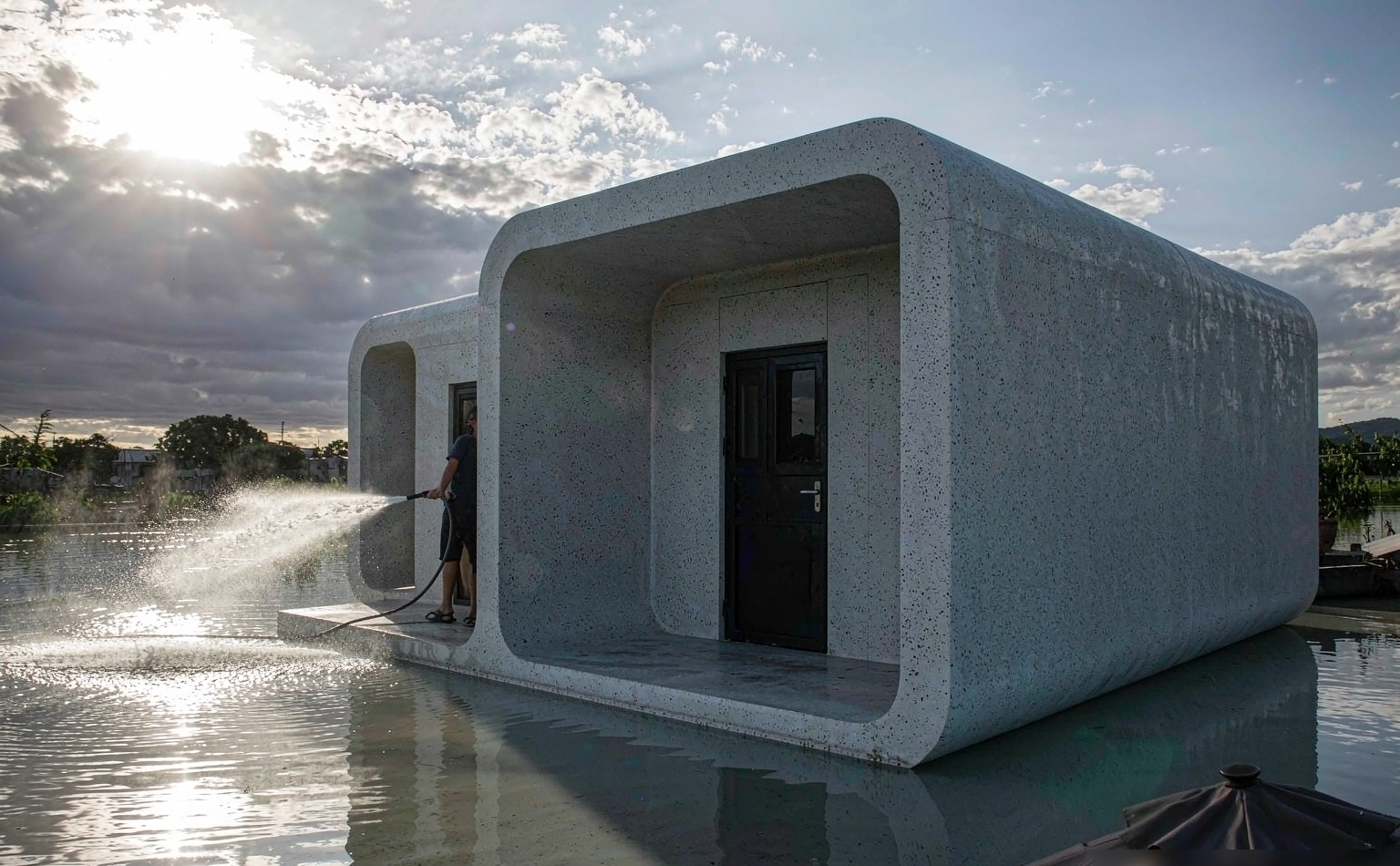
3D‑printed monolithic walls deliver better fire, water and storm resistance. Kentucky’s Floodbuster homes avoid wooden frames; after floods they can be washed clean and re‑occupied, unlike mould‑prone traditional timber housing.
Real‑world barriers remain: power supply, operator training and incomplete building‑code frameworks. Yet international standards such as ISO/ASTM 52939 have been released, and building codes are being updated. 3D‑printed construction is gradually moving from pilot projects toward mainstream disaster‑recovery use.
Post‑disaster reconstruction should not merely restore the past, but rebuild communities faster, cheaper and more resiliently.