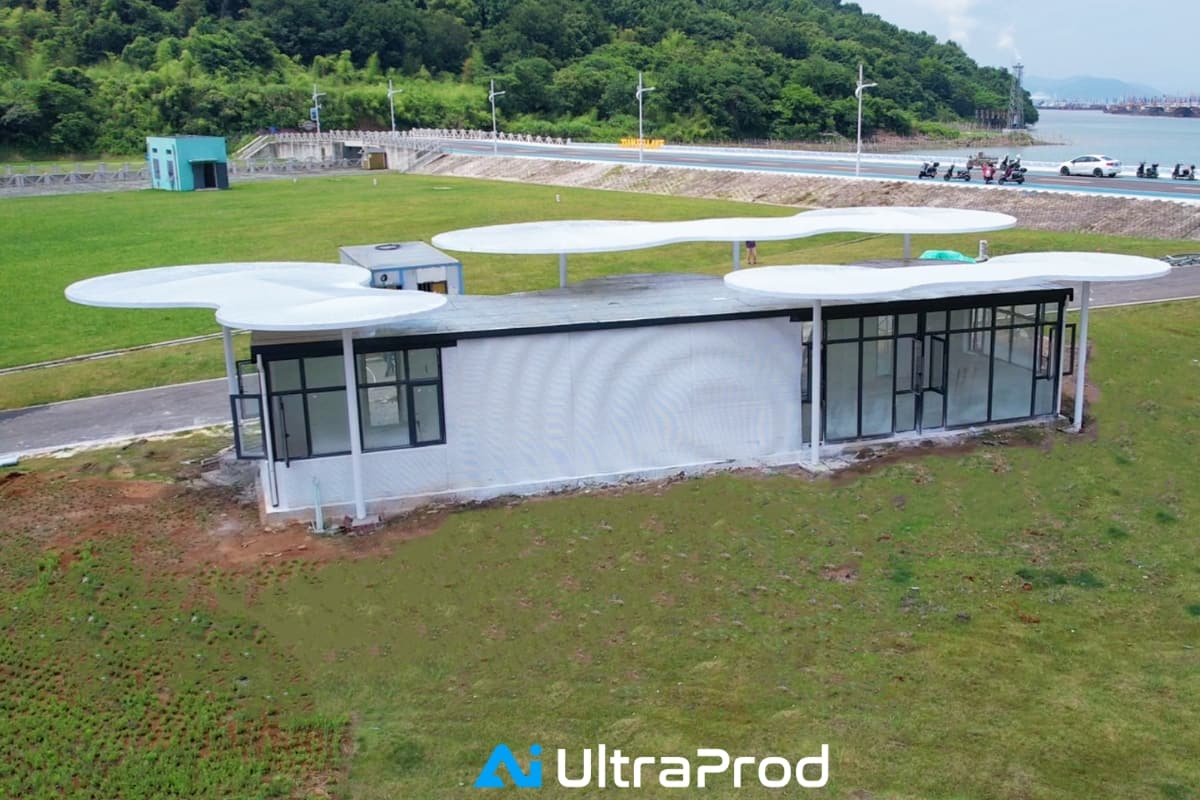
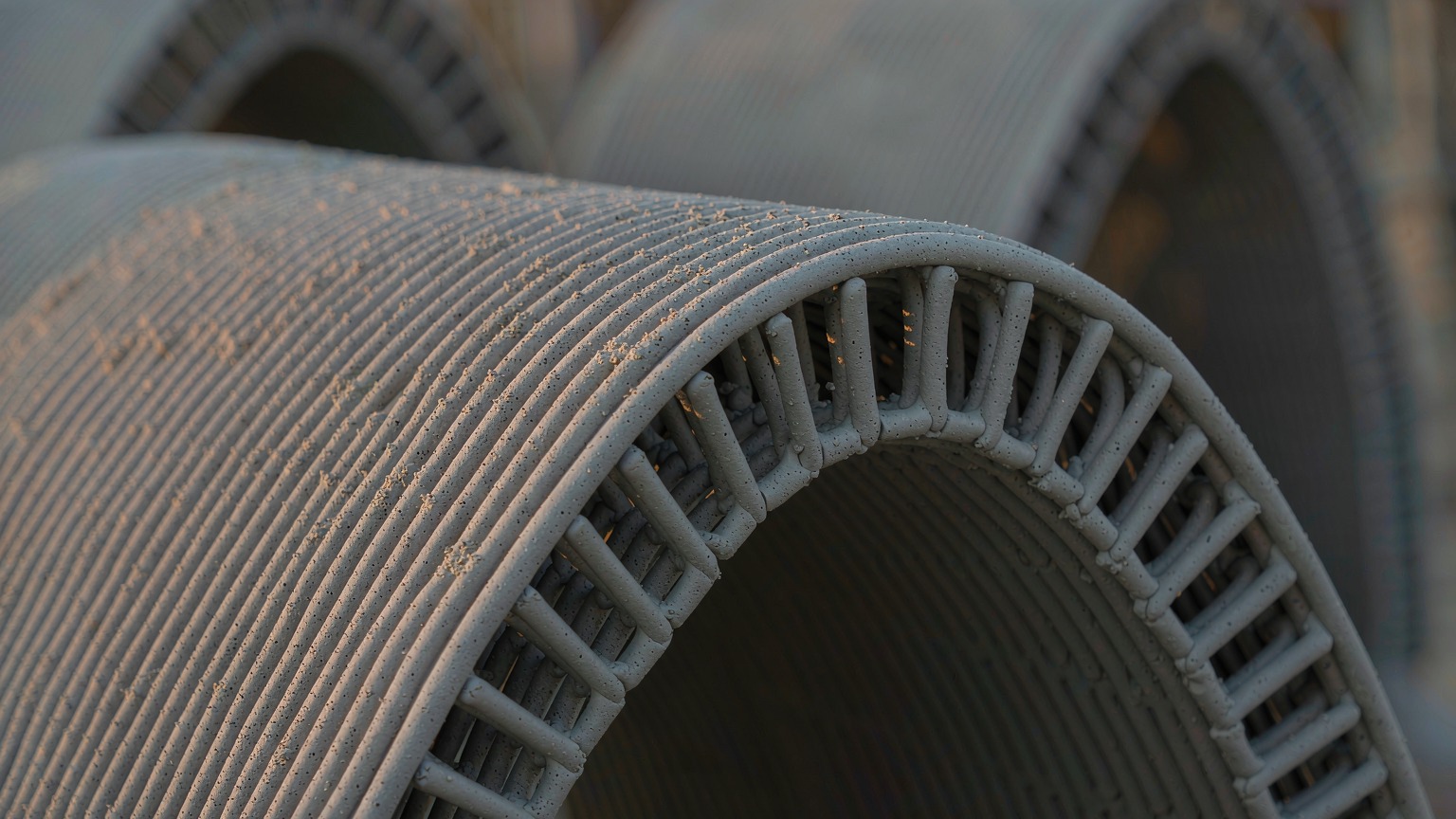
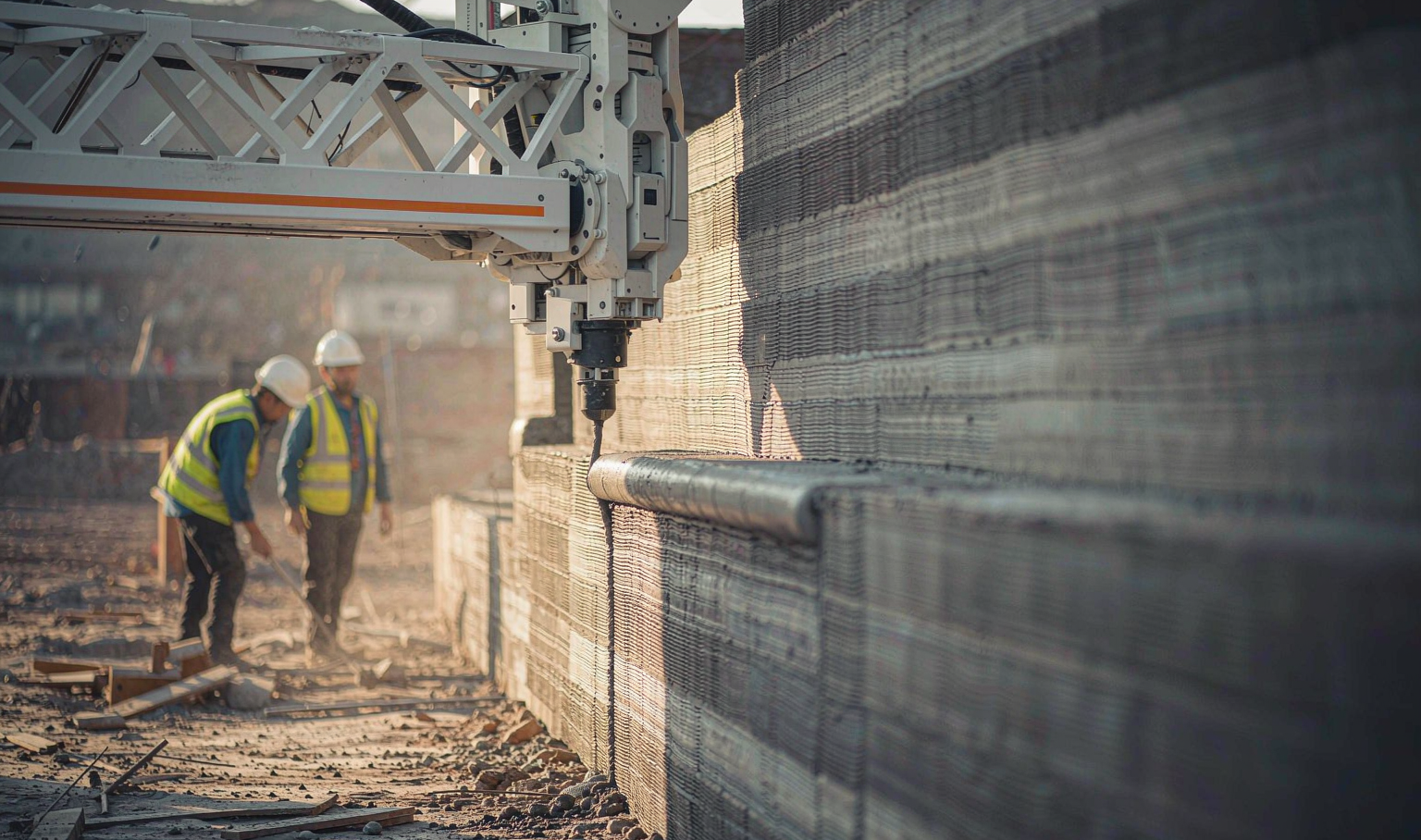
At the coastal construction site, rows of 3D-printed houses are rapidly taking shape, with wall installations steadily progressing, marking a critical phase in the project’s construction.
When laying out the formulation for 3D‑printed concrete, aggregates are one of the most unassuming yet highly constrained components. They govern whether the extruded mixture can retain its shape after
Over the past few years, discussions surrounding 3D‑printed construction have often been reduced to a binary choice: on‑site printing or factory prefabrication. Yet the engineering community is increasingly moving beyond
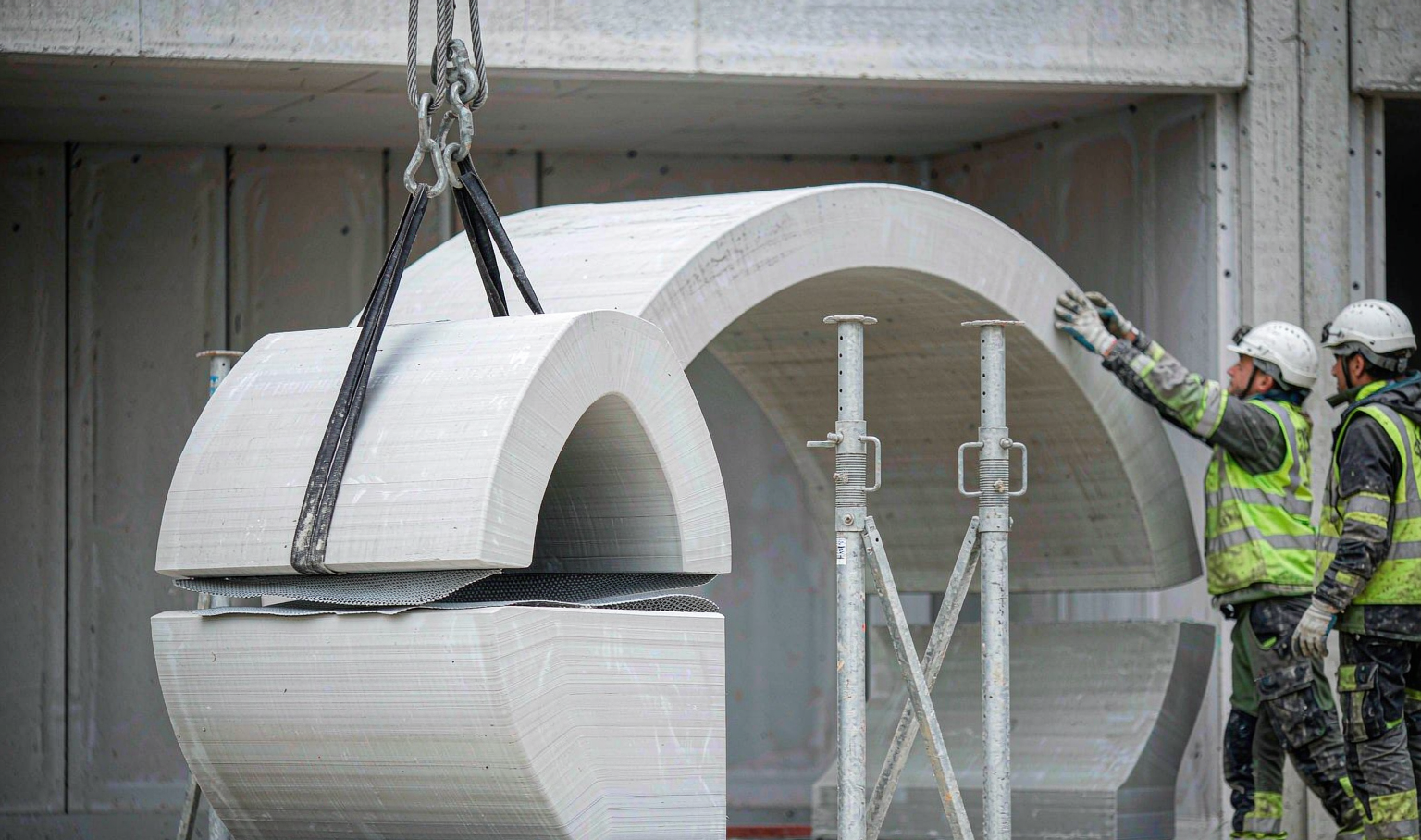
Large‑span limitations of 3D‑printed structures arise from weak interlayer joints instead of printer capacity. Three viable strategies are compression‑optimized arches, factory‑printed segments with on‑site prestressing, and external materials bearing tension.
Robotic arms can extrude concrete to print building walls rapidly. However, the load‑bearing capacity and structural‑safety assessment of such walls remain core concerns. Traditional cast‑in‑place concrete follows mature workflows including