
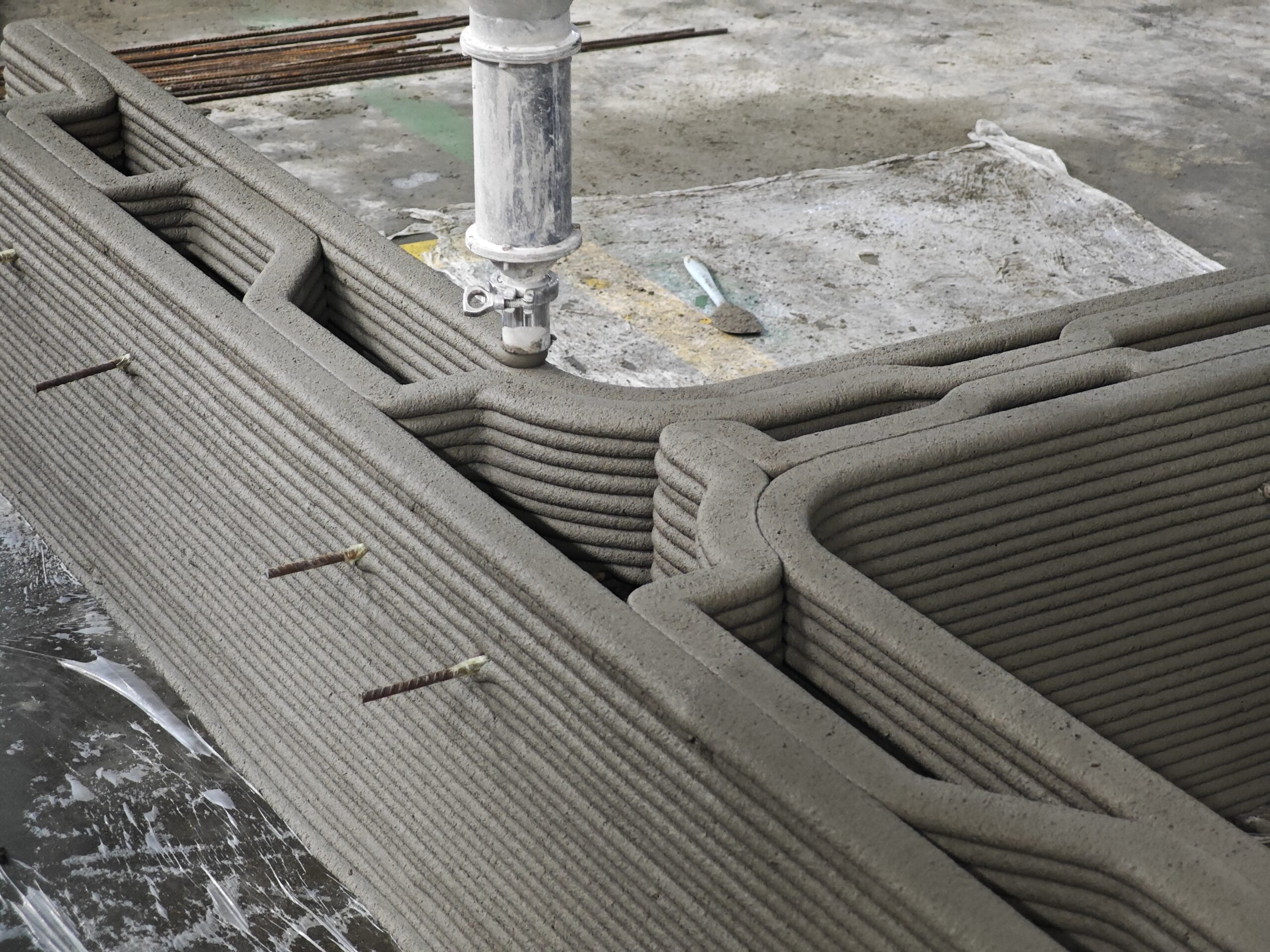
As carbon reduction evolves from an optional bonus to a mandatory requirement, 3D-printed construction has become a strategic tool in real estate enterprises’ ESG toolkit.
I. ESG Is No Longer a Choice
Over the past five years, ESG (Environmental, Social, Governance) has rapidly shifted from a niche concept to a rigid regulatory constraint for the global real estate sector.
Three key signals illustrate this shift:
| Signal | Core Facts |
|---|---|
| Tightening Regulation | The EU Corporate Sustainability Reporting Directive (CSRD) covers over 50,000 companies operating within the EU. China’s three major stock exchanges have also released guidelines for sustainability reporting. |
| Capital Market Orientation | Global ESG assets have exceeded USD 40 trillion, and real estate funds now conduct rigorous carbon footprint reviews of target projects. |
| Tenants and Consumers | Research by JLL shows 75% of corporate tenants are willing to pay a premium for green buildings. Low-carbon spaces have transformed from a discretionary perk into a core competitive advantage. |
Against this backdrop, the real estate industry faces a fundamental contradiction: construction itself is a major source of carbon emissions. The global building sector accounts for approximately 37% of total carbon emissions, with significant emissions stemming from building material production and on-site construction. Without fundamental overhauls to construction methods, ESG targets will remain unattainable.
This forms the core rationale behind 3D-printed construction’s rise to mainstream prominence.
II. The ESG Dilemmas of Traditional Construction
Traditional construction sites are commonly associated with roaring heavy machinery, queues of concrete mixer trucks, airborne dust, and piles of construction waste. Behind these visible drawbacks lie stark statistical realities:
| Dimension | Pain Points of Traditional Construction |
|---|---|
| Carbon Emissions | Cement production contributes around 8% of global carbon emissions, and construction sites consume massive amounts of energy. |
| Construction Waste | China generates over 3 billion tons of construction waste annually, accounting for more than 40% of the country’s total municipal waste. |
| Resource Consumption | Conventional formwork techniques consume large volumes of timber, most of which are single-use. |
| Labor Force | Construction workers are aging, and recruitment for high-risk job roles has become increasingly difficult. |
These issues are interconnected: high carbon emissions, excessive waste, heavy resource depletion, and labor shortages all place immense pressure on traditional construction methods when measured against ESG metrics.
III. 3D-Printed Construction: Addressing ESG Challenges at the Source
3D-printed construction is far more than simply replacing manual labor with machinery. It represents a systemic transformation spanning design thinking, construction workflows, material systems, and delivery models.
3.1 Environmental (E): Carbon Reduction, Waste Minimization, and Circular Reuse
The environmental benefits of 3D-printed construction are the most tangible:
- Precision material application delivers near-zero waste: Digital construction only prints components specified in designs. Compared with traditional cast-in-place formwork, material waste rates drop from 10%–15% to nearly zero.
- Low-carbon material alternatives: Solid waste recycling technology converts construction debris and industrial slag into printable mortar, forming a closed-loop circular construction chain: solid waste → recycled sand → printing mortar → 3D-printed construction → public infrastructure.
- Quantifiable carbon reduction results: Third-party audits confirm 3D-printed components manufactured from recycled circular materials cut carbon emissions by up to 61% versus conventional concrete casting.
3.2 Social (S): Safer Construction Sites and More Inclusive Building Access
- Reduced high-risk operations: 3D printing eliminates most manual work at height, in deep excavations, and other hazardous zones. Digital printing replaces high-risk tasks including overhead formwork installation and heavy block transport, fundamentally lowering the risk of workplace safety incidents.
- Lower barriers to entry for construction workers: Training periods for 3D printing equipment operators are far shorter than those for traditional bricklayers and formworkers, creating new pathways for laborers to enter the construction industry.
- Universal access to livable spaces: The efficiency and cost control of 3D printing enable affordable delivery of high-quality public amenities (landscape walls, rest benches, planters, stepping stones, water channels, landscape bridges, etc.) to more communities.
3.3 Governance (G): Transparent, Traceable End-to-End Data
- Full digital traceability: Every stage from design modeling and printing path generation to finished product inspection leaves digital records, naturally aligning with ESG reporting requirements for traceable data.
- Streamlined supply chains: Traditional construction relies on dozens of subcontractors and material suppliers, resulting in fragmented, hard-to-audit carbon data. 3D-printed construction integrates design, materials, and construction into a compact, streamlined chain, making carbon emission data transparent and easily auditable.
IV. Key Performance Metrics of 3D-Printed Construction from an ESG Perspective
| ESG Pillar | Core Contributions of 3D-Printed Construction | Quantifiable Indicators |
|---|---|---|
| Environmental (E) | Circular material systems + precision material usage | Recycled circular materials deliver up to 61% carbon emission reduction; material waste rate approaches zero |
| Social (S) | Elimination of high-risk work + lowered occupational entry barriers | Digital replacement of hazardous construction procedures; drastically shortened equipment operator training cycles |
| Governance (G) | Digitized full-process traceability | End-to-end digital records covering design, printing and inspection; fully auditable carbon emission data |
V. From Concept to Real-World Implementation: Verified Cases of 3D-Printed Landscapes
Beyond theoretical analysis, on-the-ground projects demonstrate the practical ESG performance of 3D-printed construction.
In commercial and public landscape development, 3D-printed construction is no longer a futuristic concept but a mature solution deployed at scale across multiple live projects. Below are six typical landscape infrastructure categories, where 3D printing delivers unmatched advantages over traditional craftsmanship:
| Infrastructure Type | Advantages of 3D-Printed Construction | Corresponding ESG Value |
|---|---|---|
| Landscape Walls | One-step forming of complex curved surfaces, no formwork required | Reduced timber consumption and construction waste |
| Rest Benches | Integrated single-print manufacturing, no assembly needed | Fewer construction processes and associated carbon emissions |
| Water Channels | Precise slope control for efficient drainage | Lower long-term maintenance costs and material waste |
| Stepping Stones | Freely customizable shapes that blend harmoniously with surrounding environments | Construction with minimal ecological disruption |
| Planters | Customized forms to fit diverse spatial layouts | Enables widespread adoption of recycled circular materials |
| Landscape Bridges | Integrated monolithic structural printing | Replacement of high-carbon reinforced concrete construction methods |
These real-world cases prove that for amenities ranging from landscape walls and bridges to planters and rest facilities, 3D-printed construction has established a fully operational closed loop: design → material production → 3D printing → on-site delivery. Every finished structure delivers measurable ESG improvements: lower carbon footprints, less waste generation, and safer, more efficient construction workflows.
VI. Why the Timing Is Right for Widespread Adoption
Three converging factors have propelled 3D-printed construction to the center of real estate companies’ ESG decision-making:
- ESG compliance has shifted from voluntary to mandatory. With carbon data now required for public disclosure, emission reduction in construction has evolved from a discretionary add-on to a binding performance target.
- Technological maturity has crossed a critical threshold. Platforms such as AiUltraprod’s Geobuild can generate preliminary design drafts within five minutes of receiving project requirements. Paired with all-terrain tracked 3D construction robots featuring three-layer closed-loop posture compensation, fusion perception positioning, and terrain-adaptive slicing capabilities, complex terrain printing is no longer a technical barrier.
- Policy incentives for the circular economy. China’s Zero-Waste City initiative and national dual carbon goals provide policy tailwinds for the circular construction model: solid waste recycling → printable mortar production → public infrastructure manufacturing via 3D printing.
Conclusion: A Paradigm Shift in Construction Methods
ESG is not a burden for the real estate industry — it is an opportunity to redefine how buildings are constructed.
The true value of 3D-printed construction lies not in its novelty, but in its fundamental overhaul of carbon management, waste generation, and operational efficiency across the entire construction lifecycle. When a 61% carbon emission reduction transitions from laboratory data to tangible project outcomes, and construction waste transforms from a liability into a raw material, construction itself becomes a pathway to achieving ESG targets rather than an obstacle standing in the way.