
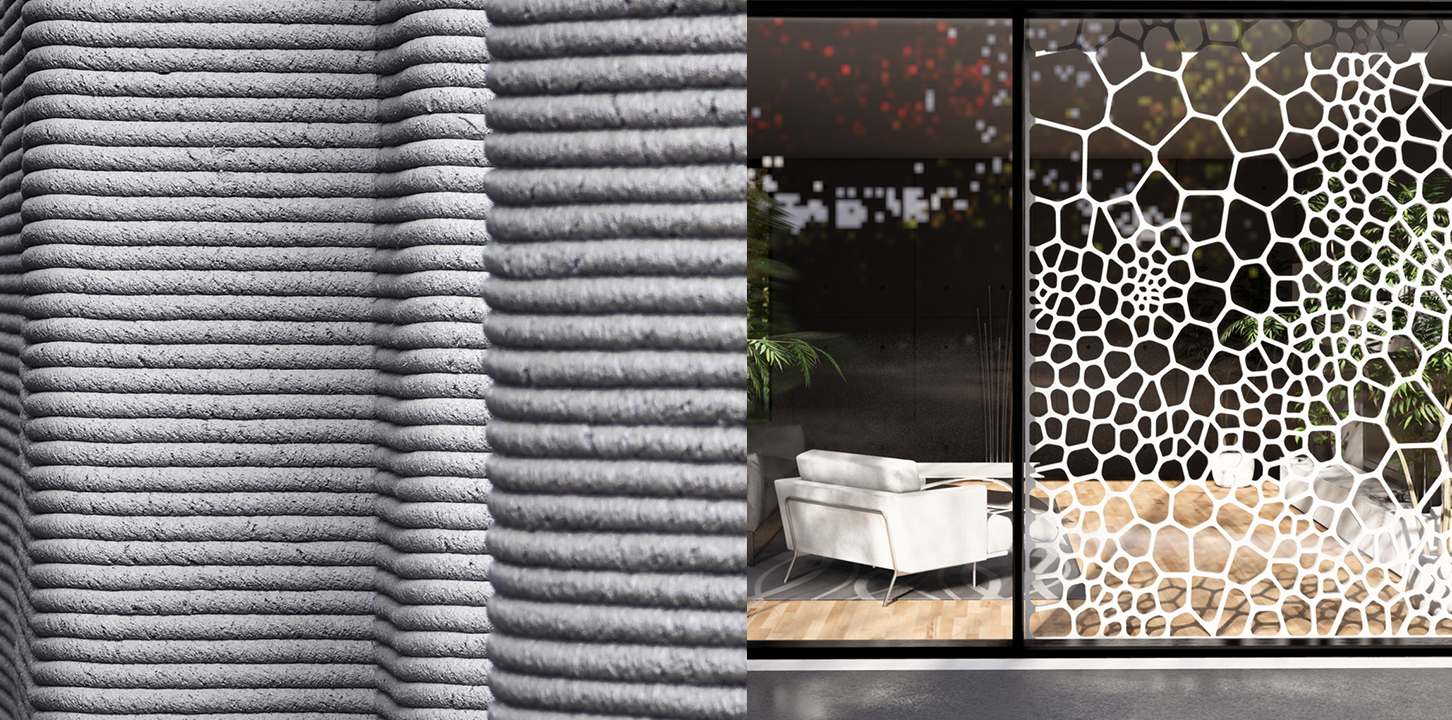
As construction 3D printing evolves from lab prototypes to mass construction solutions, material selection directly determines project cost, service life and construction feasibility. Two mainstream material systems dominate the industry: cement-based 3D printed concrete and polymer composites. Neither material is universally superior—their value lies in matching specific project scenarios. Based on on-site engineering experience from AiUltraprod, this article comprehensively compares the two materials from chemical composition, mechanical properties, construction adaptability, cost and environmental impact, offering a clear material selection guide for construction practitioners.
1. Basic Overview of Two Core Materials
1.1 3D Printed Concrete: The Structural Backbone of Construction Printing
3D printable concrete differs drastically from traditional cast-in-place concrete. It must balance extrudability (smooth flow through nozzles) and shape retention (self-support without collapse right after extrusion). Formulations include functional additives such as cellulose ether, superplasticizers and setting accelerators, plus 0.5%–1% glass or carbon fiber to compensate weak tensile performance.
It remains the most widely adopted and mature material for building 3D printing worldwide. Standard compressive strength ranges from 25–40 MPa, while fiber-reinforced optimized mixes reach over 60 MPa, sufficient for load-bearing walls, foundations, vaults and other primary structural components.
1.2 Polymer Composites: Lightweight & High-Precision Design Solution
Common feedstocks include PLA, PETG, ASA and engineering polyamides (PA). Carbon fiber-reinforced polymer (CFRP) and continuous fiber printing technologies greatly boost mechanical performance.
Its core strengths lie in ultra-low weight (density only 1/3–1/5 of concrete) and ultra-high printing precision (minimum layer thickness down to 0.2 mm), enabling free-form complex geometric designs unachievable via conventional manufacturing.
A loofah-inspired porous polymer developed by the University of Tokyo achieves a stiffness of 11 GPa at a density of merely 0.5 g/cm³, outperforming most standard plastics.
Core Performance Comparison Chart
| Comparison Item | 3D Printed Concrete | Polymer Composites |
| Compressive Strength | 25–60 MPa (structural grade) | 5–30 MPa (higher with fiber reinforcement) |
| Tensile Strength | 3–6 MPa (fiber reinforcement mandatory) | 20–80 MPa; >100 MPa with carbon fiber |
| Density | 2200–2500 kg/m³ | 900–1600 kg/m³ |
| Printing Precision | ±5–10 mm, layer height 10–40 mm | ±0.2–1 mm, layer height 0.1–2 mm |
| Curing Time | 24–72 hours full hardening | Fully cured within minutes post-printing |
| Weather Resistance | Excellent, stable outdoors for decades | Moderate; UV & humidity cause aging |
| Fire Rating | Class A Non-combustible | Class B1–B2 Combustible (flame retardant required) |
| Raw Material Cost | Low: ¥500–1,500 / ton | Medium-High: ¥20,000–200,000 / ton |
| Equipment Requirement | Large gantry/robotic arm + pumping system | Small & medium-sized printers available |
| Carbon Footprint | High (cement production generates heavy emissions) | Medium (depends on raw feedstock & recycling rate) |
2. In-Depth Technical Analysis
2.1 Mechanical Properties: Concrete for Compression, Polymers for Lightweight High Strength
Concrete holds an overwhelming advantage in compression, making it the ideal choice for load-bearing building frames. However, it inherently suffers poor tensile and flexural capacity.
Polymers perfectly fill this gap. Carbon fiber-reinforced polymers deliver specific strength (strength-to-density ratio) over 10 times higher than ordinary concrete, enabling thinner, lighter and more flexible components under identical weight limits.
The optimal industrial solution is hybrid composite construction: concrete prints primary load-bearing frames, while polymers fabricate stress-concentrated joints and decorative claddings to maximize the strengths of both materials.
2.2 Construction Efficiency: Fast Single Parts for Polymers, Mass Production for Concrete
Polymers cool and cure within minutes, allowing immediate assembly or demolding right after printing, shortening single-component production cycles significantly. The downside is limited printing speed and small nozzle size, restricting efficiency for large-volume buildings.
Concrete requires a minimum 24-hour initial curing period, with strength development sensitive to temperature and humidity. Nevertheless, large pumping systems deliver 1–5 m³ material per hour, capable of finishing the main structure of a small residential building within one day, dominating large-scale rapid construction.
2.3 Outdoor Durability: Unmatched Longevity of Concrete
With proper mix design and curing, concrete structures carry a design service life of 50–100 years, maintaining stable performance under long-term outdoor exposure.
Uncoated polymers face obvious outdoor drawbacks: UV radiation triggers a 12% annual strength loss, and temperature-humidity cycles lead to dimensional deformation. High-performance weather-resistant engineering plastics (PEEK, PEI) mitigate these issues but remain prohibitively expensive for large-scale civil construction.
2.4 Full Lifecycle Cost: Beyond Raw Material Price
Concrete boasts a far lower per-ton raw material cost, yet total expenditure must account for full lifecycle variables:
- Formwork Cost: Both materials eliminate traditional formwork, cutting substantial construction expenses;
- Transportation & Lifting: Lightweight polymers reduce transport and hoisting costs by 30%–50%;
- Long-Term Maintenance: High durability of concrete minimizes repair and renovation costs over decades;
- Labor & Equipment: Both reduce on-site labor demand, while concrete systems require higher operator expertise for large machinery.
Material selection must rely on Total Cost of Ownership (TCO) evaluation rather than raw material price alone.
3. Practical Material Strategy from AiUltraprod
As a domestic pioneer exporting construction 3D printing equipment to Spain and North America, AiUltraprod adopts a dual-track strategy: concrete as the main structural material, polymers as supplementary functional materials.
- Concrete Solution: Self-developed dual-material robotic printing ink system cuts carbon emissions per cubic meter by 30% through industrial waste reuse, material recycling, energy-saving processes and carbon-negative technologies, successfully deployed in multiple residential projects;
- Polymer Solution: Focused on custom decorative panels, structural connectors, bespoke molds and building prototypes. High-precision printing realizes complex geometries impossible with traditional manufacturing, while recycled PET and bio-based PLA reduce environmental burden.
4. Scenario-Based Material Selection Framework
- Primary load-bearing structures (bearing walls, foundations, slabs, large-span vaults) → Concrete
- High-precision custom components (decorative profiles, joints, custom molds, pipeline parts) → Polymer
- Affordable housing & emergency shelters (mass production, long-term occupancy, structural compliance) → Concrete
- Art installations & temporary exhibition buildings (complex shapes, low load, short service life) → Polymer
- Low-carbon demonstration projects & non-load-bearing landscape elements → Recycled polymers
- Optimal Comprehensive Scheme: Hybrid integrated printing (concrete main body + polymer joints & facades)
5. Five-Year Industry Technology Trends
- Normalized Multi-Material Hybrid Printing: Dual-nozzle printers extrude concrete and polymers simultaneously to form integrated structural and decorative layers in one print;
- Smart Responsive Functional Materials: Self-repairing polymers, temperature/humidity-sensitive deformable building materials enter commercial application;
- Scaled Low-Carbon Geopolymer Concrete: Industrial waste (fly ash, slag) replaces cement, slashing carbon emissions by 60%–80%;
- Cost Reduction of Continuous Fiber Reinforced Components: Aerospace fiber printing technology transfers to construction, steadily lowering carbon fiber component prices;
- Global Standardization System Completion: Unified international specifications for construction 3D printing materials transform the industry from custom manufacturing to standardized mass production.
Conclusion
Concrete and polymer composites are not competing alternatives, but complementary material systems. The core value of construction 3D printing does not lie in solving all construction demands with one single material, but matching each material to its optimal application via digital manufacturing. In the coming years, enterprises mastering multi-material hybrid printing technology will gain core competitive advantages in the industry.